
Call nowQuarry Locksmith Group, Aurora, IL
Free estimate ยท Call now(331) 466-2513CALL →
Home › Smart Lock Installation

Smart lock installation that survives a Fox Valley winter

Quarry Locksmith Group installs keypad deadbolts, Wi-Fi smart locks and retrofit kits on homes across Aurora, from the original front doors near the river to the builder hardware out east. The lock is set up with you at the door, and the estimate is free.

What changes when the key becomes a code

A smart lock is still a deadbolt. The bolt goes into the same frame and holds the door the same way an ordinary one does. What changes is how it gets thrown: a code on a keypad, a tap in an app, or the lock locking itself a set time after the door closes.

For a household that leaves early for the train and comes home at different hours, that last part matters most. Nobody has to remember whether the front door got locked, because the lock remembers for them. Most models also keep a short history, so you can see when the door was opened and with which code.
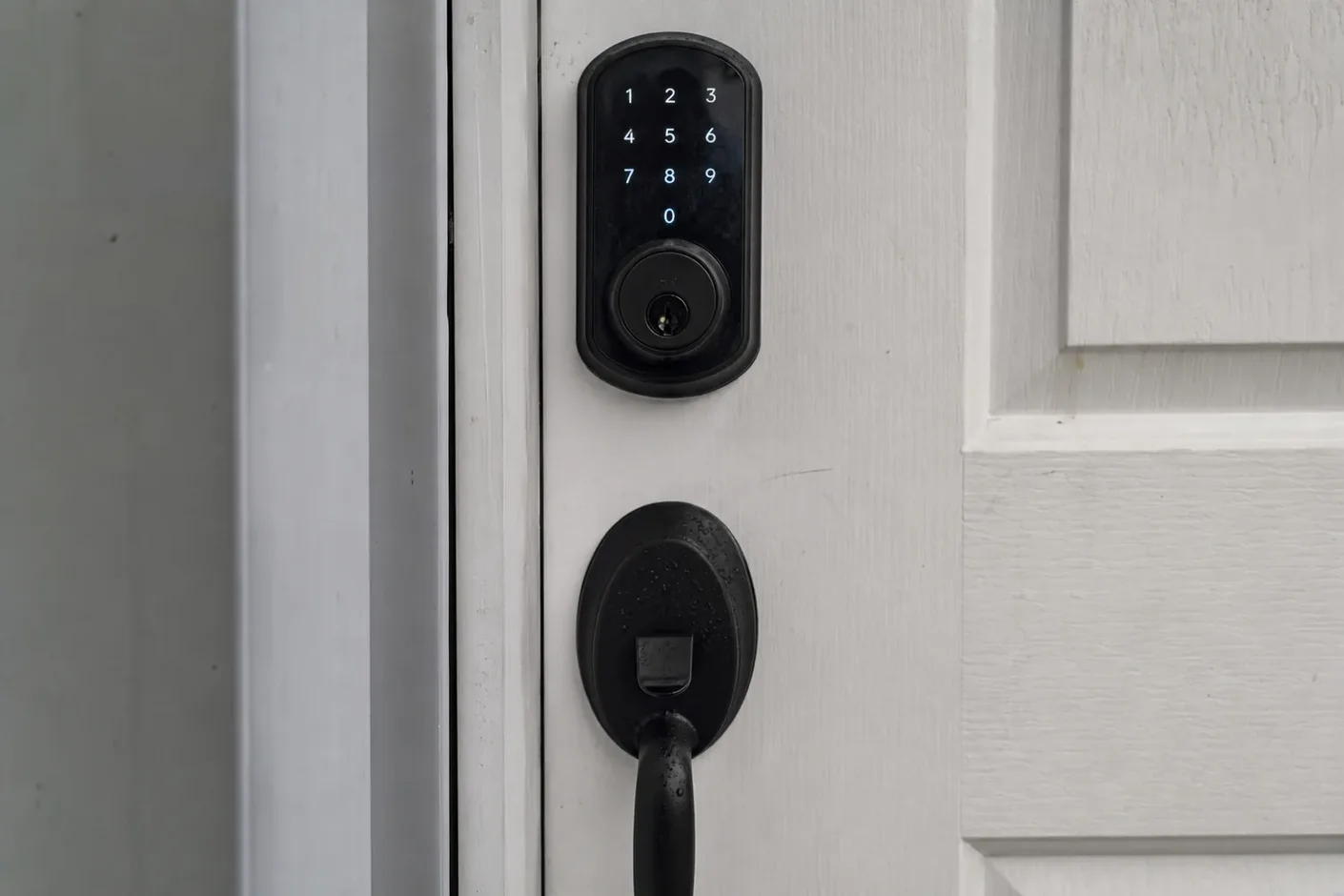
Keypad deadbolt installed on a front door, IL

Keypad, Wi-Fi or a retrofit kit

There are three broad kinds. A keypad deadbolt replaces the whole lock and runs on codes alone, with no app and nothing to pair. It is the simplest choice and the one least bothered by a weak signal at the door.

A Wi-Fi or Bluetooth smart lock adds the phone: unlocking from the app, alerts when the door opens, and codes you can hand out or take back from anywhere. Some connect straight to the home network; others need a small bridge plugged in near the door.

A retrofit kit leaves the outside of the lock alone and swaps only the thumb-turn on the inside. On an older house where the exterior hardware matches the rest of the door, that keeps the look while the inside does the new work.

Cold mornings and battery life

Smart locks run on batteries, and alkaline batteries lose strength in the cold. A keypad on a door that takes the full north wind, or one on a detached garage that never gets warm, will ask for new batteries sooner in January than in June. Most locks warn well ahead of time, by a light, a beep or a message in the app.

The other winter problem is the door itself. Frames move as the ground freezes and thaws, and a bolt that slid easily in October can start dragging against the strike by February. A motor that has to push a dragging bolt drains its batteries and sometimes stalls halfway. That is why the strike gets lined up so the bolt moves freely before any code is programmed, and why a door that has shifted is worth a second look after the first hard freeze.

Older doors, storm doors and builder hardware

Many of the older houses near downtown have thick solid doors, original hardware and holes drilled long before anyone sold a keypad. Some take a smart deadbolt in the existing opening; others need the bore or the latch hole adjusted, and a few are better served by a retrofit kit that leaves the old hardware in place. You hear which before anything is drilled.

Storm doors are common here, and a storm door with a handle in the wrong spot can block a keypad or press on it every time it closes. The technician checks the clearance between the two doors while planning the install, not after.

In the newer subdivisions the problem is the opposite: a keypad already on the door, programmed by the builder or the last owner, with codes nobody can account for. Those get cleared and set up again from scratch, or swapped for a lock that does what you want.

How an install visit runs

One trip covers most homes, whether it is one door or three.

  1. Pick the doors and the lock

    Front, back and the door in from the garage; keypad, app or retrofit, chosen with you.

  2. Fit it to the door

    The bolt, latch and strike are lined up so the lock moves without strain.

  3. Codes and app with you there

    Your codes are programmed, the app is paired to your phone, and old builder codes are cleared.

  4. Locked, opened, locked again

    Every code and the backup key are tried with the door open and closed before the visit ends.

Codes for a family, a two-flat or a sitter

The best part of a code is that it belongs to one person. A teenager, a dog walker and a relative who checks on the house can each have their own, and any one of them can be switched off without touching the others. Many locks can also limit a code to certain days or hours.

Two-flats and houses with a rented unit benefit the most. The owner downstairs and the tenant upstairs each control their own door, and when a lease ends, the departing tenant's code is deleted rather than chased after with a key.

When the lock stops answering

A keypad that stays dark, a lock that beeps but will not turn, or an app that shows the lock offline usually points to one of a few things: tired batteries, a bolt binding in a frame that moved, a bridge that lost the network, or, now and then, a failed motor. Tell us what the lock does when you enter a code, and the visit starts with the likeliest cause.

If it leaves you outside, it is treated like any other lockout: ownership is confirmed, the door is opened, and the lock is looked over so it does not happen again. Every smart lock we install keeps a key backup, and you should keep that key somewhere other than inside the house.

Smart lock questions

Will a smart lock work through the winter here?

Yes, with two cautions. Cold shortens battery life, so expect new batteries a bit sooner on exposed doors, and a frame that shifts with the freeze can make the bolt drag. A bolt lined up to move freely is the best protection against both.

Can my old front door take a smart lock?

Often, yes. Some older doors take one in the existing holes, some need the holes adjusted, and some are better with a retrofit kit that keeps the original hardware outside. You hear which before any drilling.

What happens if the batteries die?

Most locks warn you well before they go quiet, and the ones we install keep a key backup. If you are locked out anyway, call, and it is handled like a lockout, with an ownership check first.

Do I need Wi-Fi for a keypad lock?

No. A keypad deadbolt runs on codes alone. Wi-Fi or a bridge only matters if you want to unlock from your phone or get alerts away from home.

Can each person have their own code?

Yes. Most locks hold several codes, each one removable on its own, and many can limit a code to certain days or hours.

We bought a lock already. Can you install it?

Mention the brand and model on the call so the door can be checked for fit before the visit. If the door needs work first, you will hear that up front.

The builder left a keypad on our door. Is it safe?

Not until its codes are cleared. The builder, the agents and the last owner may all have had a code. The lock is reset and programmed again with only your household's codes.

Is the estimate free?

Yes. You hear what the door needs and which lock suits it, and the free estimate comes before any work starts.

We're on our way

One call and we get a tech dispatched to you.

Call now