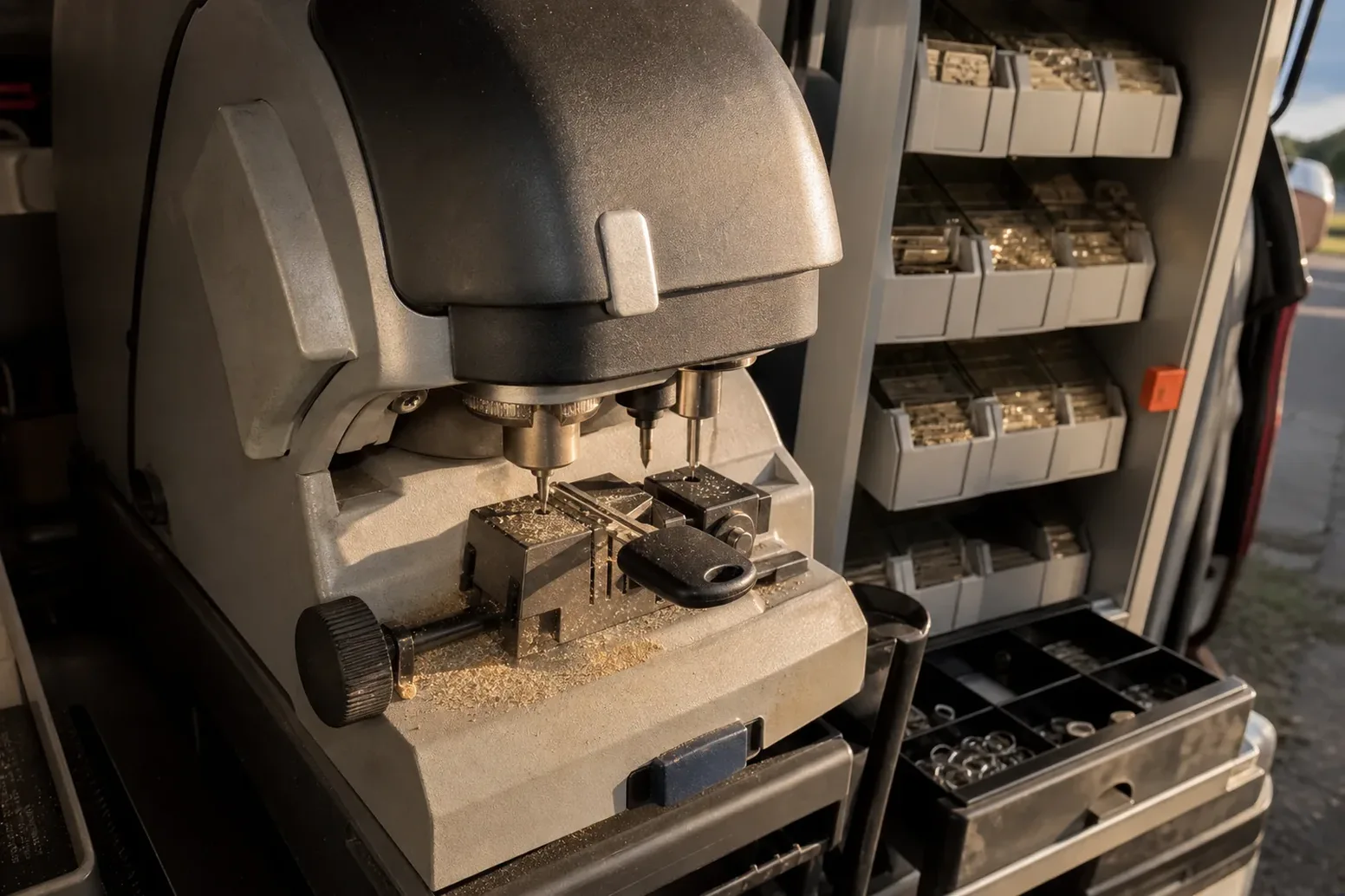
Why one copy works and the next one sticks
Most houses run on copies of copies. The original key went to the first owner, a copy was made from it, then a copy of that copy, and somewhere down the line a key lands on your ring that only turns if you lift the handle and wiggle it. Every generation of copy carries the wear of the key it was traced from, plus a little of its own, and the lock notices long before you do.
That is why a fresh copy of a tired key is often no better than the tired key. When the key in your hand is the problem, the better answer is a key cut to the lock itself, to the depths the lock was built for, so the new one slides in and turns the way the first key did when the lock was new. It also stops the next round of copies from inheriting the same drift.